Mostrando entradas con la etiqueta Great families of Cornwall. Mostrar todas las entradas

lunes, 10 de agosto de 2015

Stunning Poldark Location

Cliff Top Home With Breathtaking Sea Views From Almost Every Room In The House.

Exceptional Cliff top location directly above Gunwalloe Fishing Cove, Near Helston, Cornwall, UK - Stunning Poldark Location With Sea, Beach And Coastal Path And Walks Literally On The Doorstep!

This five-star, award winning, unique and stylish home combines elegance, taste and comfort, to provide a home from home. Facing west means the most amazingly romantic and dramatic sunsets like those featured in the recent Poldark TV adaptation, many scenes of which were filmed at nearby Dollar Cove, minutes from the house. With high speed internet access even in the Summer House, and great attention to detail the emphasis is on making guests feel special. This is truly a comfortable family home. The location of the house and layout of the garden makes it an ideal spot to entertain or host that special occasion.

About the Owner

Steve and Trish Harman live in England with their three children. Their passions include golf, racing and travel. Although they have lived abroad and travelled extensively, in Gunwalloe they feel they have discovered a piece of paradise!

Mineral Lords in Cornwall

Mineral Lords in Cornwall

Landowners with substantial estates could make a fortune from leasing out mineral rights – much more than they would have made through agriculture.
They quickly became hugely wealthy, earning them the name ‘mineral lords’.

Cornish mining made substantial technological, social and economic contributions to the British industrial revolution and introduced pioneering industrial practices overseas. This occurred at a crucial formative period in the development of modern industrial society and played a key role in the growth of a global capitalist economy.


Link to the photo HERE

Gwennap was once described as the "richest square mile in the Old World".
The mineral lords had a key part to play. Not only did they help finance the mines, but they were also influential in helping to set up industrial infrastructure, ancillary businesses and settlements.

Who were the mineral lords?
The Williams family of Scorrier, the Basset family, Sir William Lemon of Carclew and Lord and Lady de Dunstanville were among the most successful mineral lords in Cornwall. Many of them possessed huge acreages of mineral-rich land and were also able to invest capital into the mines themselves.

Much of the wealth they amassed was transformed into great mansions, estates and extensive gardens, many of which can still be seen today. Older estates went through elaborate transformations, complete with lavish ornamental gardens.

Development and influence over the mines
Mineral lords had a huge amount of influence over the development of the mines. John Williams promoted a major drainage adit driving scheme which became arguably the most dramatic engineering achievement within the district. Begun in 1748 to drain Poldice Mine, this extraordinary drainage system was gradually extended to the other mines of the district and eventually became known as the Great County Adit.

Adventurers
Setting up a new mine was a costly business. Adventurers would help finance the cost in return for a share in the profit. There were huge fortunes to be made, but it was a risky business. The larger their share, the larger their profit – or loss. If the mine failed to produce the anticipated amount of ore or ran into problems, they could find themselves in financial difficulty when a ‘call’ for funds was made.

Mineral lords who had the financial capital to also invest in mines stood to gain the most. Sir William Lemon held a quarter share in one of the most profitable of Cornish mines, Wheal Unity.

Great Houses & Gardens of Cornwall

Great Houses & Gardens of Cornwall

Many great houses and estates were created and embellished by money made from the mining industry. A number of outstanding houses and gardens in Cornwall which once belonged to the mineral lords, or the industrial ‘nouveau riche’, still survive today.


Symbols of great wealth
While upward social mobility meant that people with new money were able to move to more attractive areas of towns and villages, the landed classes – many of whom made huge fortunes form the mining industry – were keen to reflect their success and status.

During the expansive period of industrialisation many new estates were built, including a mansion at Scorrier constructed by the Williams family and Carclew, the home of William Lemon. Older estates underwent elaborate transformations. Tehidy, the seat of the Basset family, was one of these. The mansion was rebuilt by John Francis Basset in 1861, reflecting the fortune he had made from local mines. His yearly income from the Dolcoath and South Frances mines was about £20,000 (worth approximately £860,000 today).

These elegant mansions boasting well stocked libraries, music rooms and conservatories crammed with plants were shielded from the source of their wealth – acres of mine tips and industrial buildings that ‘scarred’ the landscape – with lavish ornamental gardens.


The rise of horticulture
Horticulture became increasingly popular amongst the wealthy during the 19th and early 20th centuries. Several of the families involved with the mining industry became notable horticulturalists. Many sponsored plant-hunting expeditions all over the world to look for new species they could bring back to Cornwall.

Due to Cornwall’s mild climate, many of the plants and shrubs brought back from more tropical regions flourished here, particularly in the more sheltered, south-facing gardens. Rhododendrons, brought back from India and the surrounding areas, and tree ferns, which originate from New Zealand and Australia, have flourished in Cornish gardens. As a result, many of the gardens that developed during this period have become internationally renowned.


Carclew House
Once home to one of the great Cornish mining dynasties, the Lemon family, Carclew was destroyed by fire in 1934. Sir Charles Lemon’s family was one of the first to receive and grow rhododendrons from seed around 1850, sent from Sir Joseph Hooker’s expedition to the Himalayas.

Trevarno House
Trevarno House, formerly the home of the Wallis mining family, later became the home of the Bickford-Smiths (safety-fuse manufacturers). It’s famous for its magnificent gardens and is also home to the National Museum of Gardening.


Trengwainton House
Trengwainton House was bought by the Bolitho family, one of the great Cornish mining families in 1867. When Lt. Col. Edward Bolitho inherited the garden in 1925, he set about transforming the garden with exotic species. He sponsored a plant-hunting expedition to Assam and the Mishmi Hills in Burma in 1927-8. Many of the specimens brought back from that venture had never been grown in the UK before. The rhododendrons at Trenwainton today were grown from seeds brought back by that expedition.

The property is now owned by the National Trust, and the gardens are open for visitors.


Link to the photo HERE

Tehidy House
The Tehidy estate had been owned by the Basset family since Norman times. During the height of the mining boom, the family’s wealth grew exponentially as a result of income from mining and land rents. The house was rebuilt by John Francis Basset between 1861-1863. The estate was sold by the Basset family in 1916. The mansion was destroyed by fire in 1919, and replaced by the new owners in 1922.

sábado, 8 de agosto de 2015

THE GREAT FAMILIES OF CORNWALL: The Trevanions

THE GREAT FAMILIES OF CORNWALL: The Trevanions

Trevanion of Carhayes. — Their pedigree is traced to Sir John Trevanion, who was of Trevanion in Carhayes, six generations before the reign of Edward IV. This family, who acquired the manor and barton of Carhayes by marriage with an heiress of Arundell, became extinct in the male line by the death of William Trevanion, Esq., M. P. for Tregony in 1767. His two sisters and coheiresses married John Bettesworth, LL.D., and Admiral Byron, grandfather of the present Lord Byron. The grandson of Dr. Bettesworth and Frances Trevanion, the elder sister, John Trevanion Purnel Bettesworth, took the name and arms of Trevanion by His Majesty's sign-manual in 1801, and is the present immediate representative of this ancient family, and the possessor of Carhayes.

This family have married the heiresses of Beaupré or Belloprato, Archdekne, Carminow, Arundell, Witchalse, and the coheiresses of Petit and Drummond. A younger branch of the Trevanions, seated at Trevalster, became extinct after three generations: the coheiresses married Trefusis, Bligh, and Boscawen. Another younger branch was settled at Trelugan in Gerrans. Hugh Trevanion, the last of this branch of the family, which had continued above two centuries, who married one of the coheiresses of Chamond (fn. n13), and the heiress of Mayow alias Hellier of Lostwithiel, died, one of the poor knights of Windsor, in 1730. There was also another branch of the Trevanions settled for many years at Trevascus in Gorran, which became extinct by the death of Charles Trevanion, Esq., in 1767.

A hundred and fifty years ago a visitor to Caerhays would have found a ruined mock Castle surrounded by a Deer Park. Caerhays has been lived in by two families since 1370. The Trevanions from 1370 to 1840. The Williams family purchased the property in about 1855. The first owner, Michael Williams, Mine Owner and Banker, died in 1858 so it is highly unlikely he ever lived at Caerhays.

A great deal had to be done to the property and his son, John Michael, a man with international mining interests, carried through even more repairs. His eldest son and successor, J.C. Williams, was born at Pengreep in 1861 and succeeded to the property on his father’s death in 1880. For a few years John Michael’s widow lived at Caerhays until her death in 1884 which, in turn, was the same year that J.C. Williams married his cousin Mary Christian. It would appear therefore that it was not until 1892 that Caerhays became a proper home for the Williams family.

As a result Caerhays missed the excitement of the Indian plant discoveries of Wallich and the later introductions of Sir John Hooker from Sikkim. The first Cornish gardens to try out these new arrivals were Carclew and, later, Heligan.

J.C. Williams and his cousin and friend, P.D. Williams of Lanarth, became members of the Royal Horticultural Society in about 1892/93. J.C. Williams had become attracted to the gardening ideas of William Robinson and was beginning to harbour ambitions for making a wild garden at Caerhays but, in 1897, he was diverted by a new interest; namely that of daffodil breeding. If J.C. Williams became interested in something he was not one to take half measures. His friendship with the Reverend George Engleheart began in 1897 and was very opportune as Engleheart had started to show off his work as a pioneer on daffodil hybridising. JCW was a heavy purchaser of these new varieties and they formed the chief basis for his future hybridisations. The other basic varieties he used for plant breeding were Lulworth, Monarch and Weardale Perfection, coloured representations of which had featured in William Robinson’s magazine, ‘The Garden’.

J.C. Williams was a very private person and prized his privacy. It is almost certain that he was not very pleased when William Robinson visited Caerhays in 1899 whilst J.C. Williams was away and described developments being made with Rhododendrons, Bamboos, Tree Ferns etc. The article was signed with a large ‘V’ which possibly showed that he thought getting into Caerhays was a triumph.

The next stage was the arrival in Veitch’s Nursery of the first new rhododendrons from China which had been collected by E.H. Wilson. It is then that the subsequent debate that must have occurred as to where these new varieties, which held great potential for British gardens, were to be tested. Caerhays was chosen. Many of the original Wilson species and plants from this time can be seen in the garden. The biggest cluster is in the Big Quarry which visitors will see when they come down the hill when leaving the garden (that is if they follow the suggested blue route around this garden!).

Mr Wilson continued to explore China but changed his employers leaving Veitch’s Nurseries and going to work for the Arnold Arboretum which is outside Boston, Massachusetts. At that time, the Arboretum was under the management of the greatest expert of the new Asiatic plants, Professor Charles Sprague Sargent.

Wilson remained in close contact with J.C. Williams and must have told the Professor about Caerhays and the way Chinese plants were being tested.

So it was in 1911 that plants arrived from the Arboretum some of which visitors may come across in their garden wanderings today.


It was the Trevanions who built Caerhays and it was they who went bankrupt so spectacularly around 1839 that they managed to almost vanish from the history of Cornwall.

THE GREAT FAMILIES OF CORNWALL: The Grenvilles

THE GREAT FAMILIES OF CORNWALL: The Grenvilles

The Grenville family descend from Rollo, a noble chieftain of Norway, who being driven thence by the King of Denmark, attempted with his followers a descent on England, but experienced a repulse from Alfred. In the year 870, he made an irruption into Normandym which conquest he completed in 912. He was afterwards invested with the title of duke of Normandy, and married Gilbette, daughter of Charles the Semple, king of France, by whom he had two sons, From William, the eldest, descended William the Conqueror, and the succeeding kings of England; and from Robert, the second son, created earl of Corbeil, descended Hamon Dentatus, the sixth earl of Corbeil, who had two sons, by Elizabeth D'Avoye, his near kinswoman, widow to Hugh the Great, and sister to the emperor Otho. The eldest was called after his own name, Robert Fitz Hamon; the second son, Richard, (as is still the custom in those countries) after the name of one of his lordships, Granville which surname of Granville, or by corruption Grenville, Greynville, Grenfel, Greenfield, Graynefield, and Granvilia, has remained to his posterity ever since.

The two brothers, Robert Fitz Hamon, and Richard de Granville, accompanied William the Conqueror in his expedition into England, and were present with him at the great battle near Hastings in Sussex, where king Harold was slain. For their signal services, the Conqueror bestowed on them large gifts and honoursm particularly to Richard de Granville, the castle and lordship of Bideford, Devon, with other lands, lordships, and possessions, in Cornwall, Devon, Somerset, Gloucestershire and Buckinghamshire.

After the death of the Conqueror, the said Robert Fitz Hamon, choosing twelve knights for his companions, of whom his brother Richard was one, entered Wales with an army, slew Rheese, their prince, in a pitched battle, and making an entire conquest of Glamorganshire, obliged the rest of the country to pay tribute to the king of England. To reward these and other great services, and being his near kinsman, William Rufus made the said Fitz Hamon, a free prince in all his conquered lands, holding them in vasalage of the king, as his chief lord, which the said Fitz Hamon divided between himself and his twelve knight companions, William Rufus dying, he was, by Henry 1, sent as a general of his army against France, where he received a wound from a pike on his temples, of which he died; and leaving a daughter Mabel, the wife of Robert de Council, natural son to Henry 1, he in her right, enjoyed great part of his lands in England.

Richard de Granville, as the heir male, inherited by the Norman laws, all the estate and honour of his family in Normandy, and thereby became earl of Corbeil, baron of Thorigny and Granville. He had also for his share of the lands taken from the Welsh, the old castle of Neath, in Glamorganshire, and Juia Regalia, in that territory: there he founded an abbey for religious monks, and endowed it with all the lands he held in Wales. Leland says, that the town of Neath (so called by the Welsh) had the name of Granville. In his old age, according to the devotion of those times, he took on him the sign of the cross, and setting forward for Jerusalem, died on his journey, thither, leaving issue by his wife Constance, only daughter of Walter Giffard, earl of Buckinghamshire and Longueville.

Richard, his son and heir, who held in the reign of Henry 11, the lordship of Bideford, Devon, by half a knight's fee of the honour of Gloucester. In the second of king John, being stiled lord of Bideford and Kilkhampton, he paid forty marks and a palfrey to have an assize of the advowson of these two churches, against the abbot of Tewkesbury. In the twelth of the same reign, he held three knights' fees and a half in the counties of Cornwall and Devon and died in the first of Henry 111. He married Adeline, widow of Hugh Montfort, eldest daughter of Robert de Bellemont, earl of Mellant in France and the first earl of Leicester in England, after the conquest, by Elizabeth, daughter of Hugh, the great earl of Vermandois, son to the king Henry of France: to him succeeded Richard de Granville, his son and heir, under age at his father's death. He married Jane, daughter to William Trevint. Richard his eldest son married Catherine, daughter of Josceline, of Mount Tregiminion, and died without issue. Bartholomew de Granville, his brother became his heir. By his wife Anne, daughter of Sir Vyell Vivian, of Trevideren, in Cornwall, he left Henry his son and heir, who enjoyed the manor of Kilkhampton and Winkleigh, with the honour and manor of Bideford etc. He left issue by his wife Anne, daughter and heiress to Wortham.

Sir Theobald, his son and heir, under age, who became ward to Sir John Carew. He married Joice, daughter of Sir Thomas Beaumont, knt., by whom he had Theobald, his son and heir, who married Margaret, daughter of Hugh Courtenay, earl of Devon, and had two sons; John, who married Margaret, daughter and heiress of Sir John Burghursh, (her sister Maud was married to Thomas Chaucer, the writer). He lived at Stowe and was knight of the shire, for the county of Devon, in several parliaments, but died without issue, leaving William his brother and heir, to succeed him, who died about the twenty-ninth of Henry V1, leaving issue by Phillipa, his second wife, sister of William Lord Bonville, Thomas his son and heir, (ancestor of Prince William) and two daughters, Ellen who married William Yeo of Heanton Satchville, (ancestor of most of the Yeo descendants), and Margaret who married John Thorne of Thorne in Cornwall. Thomas was knighted in the seventeenth year of Henry V11 reign and married Elizabeth Gorges, sister to Theobald Gorges, knt.


The Grenville family lived at Stowe House from 1580. The original house was demolished in 1670, eleven years after the death of Sir Richard Grenville. Sir Richard had been on the Parliamentarian side during the Civil War, but in 1644 he switched allegiances and became a Royalist. History remembers him as an exceptionally cruel and callous soldier, who would often starve his prisoners to death.

The house seen here was built in 1680 but was demolished in the early 1800s to make way for a farm house.

THE GREAT FAMILIES OF CORNWALL: The Godolphins

THE GREAT FAMILIES OF CORNWALL: The Godolphins


Godolphin House. Link to the photo HERE

Sidney, Earl of Godolphin, Knight of the Garter and Queen Anne's chief minister, is buried in the south aisle of the nave of Westminster Abbey. On the wall is a bust of him by sculptor Francis Bird and a cartouche with the inscription:

"SIDNEY Earl of GODOLPHIN, Lord High Treasurer of Great BRITTAN and Chief minister dureing the first nine glorious years of the reign of Queen Ann he dyed in the year 1712 the 15 day of Sept. aged 67 and was burried near this place to whose memmory this [monument] is offer'd with the utmost gratitude affection and honour by his much obliged daughter in law HENRIETTA GODOLPHIN"

He was born on 15 June 1645, the third son of Sir Francis Godolphin and his wife Dorothy (Berkeley). On 16 May 1675 in the Temple Church in London he married Margaret Blagge, maid of honour to Queen Catherine (her father Thomas was buried in the Abbey in November 1660). In 1706 he was created Earl of Godolphin. His son was Francis (1678-1766) who became 2nd Earl of Godolphin. Sidney began his long career at the Court of Charles II as a page and worked in the exchequer and became groom of the bedchamber. His career in politics was long and varied and Queen Anne appointed him Lord High Treasurer in 1702 so he became the most powerful English politician of his day. Later he was instrumental in passing the Act of Union with Scotland to form the United Kingdom of Great Britain. Margaret was buried at Breage in Cornwall on 16 September 1678.

Sir William Godolphin

Sidney's elder brother Sir William Godolphin was also buried in the south aisle of the nave but he has no monument or gravestone. He was created a Baronet, of Godolphin in the county of Cornwall in 1661 but died unmarried so his title became extinct. He was buried on 3 September 1710.

Charles and Elizabeth Godolphin

The fifth son of Sir Francis was Charles Godolphin, Member of Parliament for Helston and one of the Commissioners of the Customs. He was buried in the west cloister of the Abbey. His wife Elizabeth, daughter of Francis Godolphin of Coulston in Wiltshire, was buried with him and their children Anne (born and died 1688) and William (born and died 1694). The couple founded several charities and a large monument of various coloured marbles and cherub heads was erected in the west cloister. The inscription reads:

"Here rest in hope of a Blessed Resurrection CHARLES GODOLPHIN Esqr. [Esquire] brother to ye Right Honble. SIDNEY Earl of GODOLPHIN Lord HIgh Treasurer of Great Britain, who died July 10th 1720 aged 69 And Mrs GODOLPHIN his wife who died July 29th 1726 aged 63. Whose excellent qualities and endowments can never be forgotten particularly the public spirited zeal with which he served his country in Parliament and the indefatigable application great skill and nice integrity with which he discharged the trust of a Commissioner of the Customes for many years. Nor was she less eminent for her ingenuity witt sincere love of her friends and constancy in religious worship But as charity and benevolence were the distinguishing parts of their characters so were they most conspicuously displayed by the last act of their lives a pious and charitable institution by him designed and ordered and by her compleated to the glory of God and for a bright example to mankind. The Endowment wereof is a rent charge of one hundred and eighty pounds a year issuing out of lands in Somersetshire and of which one hundred and sixty pounds a year are to be for ever applyed from ye 24th of June 1726 to the educating eight young gentlewomen who are so born and whose parents are of the Church of England whose fortunes doe not exceed three hundred pounds and whose parents or friends will undertake to provide them with decent apparell and after the death of the said Mrs GODOLPHIN and WILLIAM GODOLPHIN Esq. her nephew such as have niether father or mother which same young gentlewomen are not to be admitted before they are eight years old nor to be continued after the age of nineteen and are to be brought up at the City of New Sarum or some other town in the county of Wilts. under ye care of some prudent governess or schoole mistress a communicant of ye Church of England and the overplus after an allowance of five pounds a year for collecting the said rent charge is to be applied to ye binding out one or more poor children apprentices whose parents are of the Church of England. In perpetual memory whereof Mrs FRANCES HALL Executrix to her aunt Mrs GODOLPHIN has according to her will and by her order caused this inscription to be engraven on their monument 1727".

The monument is currently strapped to prevent movement. The Godolphin School at Salisbury lay a wreath at the monument bi-annually.

Henrietta Godolphin

Henrietta Godolphin, who put up Sidney's monument, is buried near it but she herself has no monument or gravestone. The Abbey burial register gives her titles: "Henrietta, Duchess of Marlborough, Marchioness of Blandford, Countess of Marlborough, Baroness Churchill of Sandridge, Countess of Godolphin, late consort of the most noble, potent Lord Francis, Earl of Godolphin". She married Francis, 2nd Earl of Godolphin. She was the eldest daughter and co-heir of the great John (Churchill), Duke of Marlborough (who was buried briefly in the Abbey from 1722 to 1744 when his remains were removed to Blenheim Palace). Her mother was the well known Sarah, Duchess of Marlborough and she was born on 20 July 1681. Later she succeeded to her father's titles under a special Act of Parliament. Henrietta died on 24 October and was buried on 9 November 1733. In her will she made it clear that her remains should never, under any circumstances, be removed to Blenheim. She was patroness of the poet William Congreve and put up a memorial to him in the nave.

The Abbey registers record another Godolphin burial on 15 March 1679 (New Style dating) but one register says Dorothy and another, kept by the Minor Canon who possibly carried out the service, says Mrs Anne Godolphin. If she was Anne, she could have been the younger sister of Sidney who died of small pox at this time.

Photos of the monuments can be purchased from Westminster Abbey Library.

Further reading for Sidney, Margaret and son Francis:

Oxford Dictionary of National Biography 2004.

Also:

"Life of Mrs Godolphin" by John Evelyn (1847)

"The Godolphin School 1726-1926" edited by M.A.Douglas & C.R.Ash (1928)

www.historyofparliamentonline.org

Godolphin House at Helston, Cornwall is owned by the National Trust and is open to the public.

THE GREAT FAMILIES OF CORNWALL: The Fox family

THE GREAT FAMILIES OF CORNWALL: The Fox family

The Fox family of Falmouth, Cornwall, UK were very influential in the development of the town of Falmouth in the 19th century and of the Cornish Industrial Revolution.

In the 18th and 19th centuries, many of them were members of the Religious Society of Friends (Quakers).

Caroline and Barclay Fox kept remarkable journals, which were published in the 1970s and provide historical and literary biographical sources for mid-nineteenth century Britain. Caroline's Journal was originally published in 1881, when it was a “surprise best-seller”.

A new selection from the 1882 edition by Wendy Monk was published in 1972.

Caroline Fox kept her journal from 1835 to 1871.

Barclay Fox kept his journal from 1832 to 1854 (but with few entries after 1844).

Barclay's journal was published in a scholarly but accessible edition by Raymond L. Brett in 1979, reprinted with additional material in 2008.

ROYAL CORNWALL POLYTECHNIC SOCIETY
The idea for the foundation of the Royal Cornwall Polytechnic Society was created by Caroline, Barclay and their older sister, Anna Maria. The first Committee of the "Poly", elected in January 1833, was rather dominated by Fox family members: "Dr. Fox , Mr & Mrs RW Fox, Mr & Mrs GC Fox, Mr TW Fox, Mr GP Fox, Mr & Mrs A Fox, Mr J Fox, Mr & Mrs C Fox of Perran, Miss Fox and Misses AM and C Fox and Mr RB Fox of Bank.".[5]
In 1870, the Falmouth & Penryn Committee included Charles Fox (President), Miss AM Fox, A.Fox, N.Fox, RW Fox, Howard Fox, Mrs Howard Fox, Robert Fox, Samuel Fox and George Henry Fox. Miss AM Fox judged the Needlework that had been exhibited in the Annual Exhibition.[6]
The Poly in Church Street, Falmouth hit serious financial problems in January 2010 and closed its commercial arm.

SCIENCE AND TECHNOLOGY
R.W.FOX FRS
Caroline and Barclay's father and uncle were both scientists. Their father, Robert Were Fox, was an FRS with interests in mineralogy, metallurgy and geomagnetism. He was a live wire in the British Association. He invented an improved version of the Dipping Needle Deflector, a navigational aid for polar explorers.

CHARLES FOX
Their uncle, Charles Fox also published scientific papers and ran an innovative Iron Foundry.

FOX FAMILY AND THE BAAS
The Fox family descended from R W Fox the Elder had a long engagement with the British Association for the Advancement of Science (now called the British Science Association), founded in 1831.
In August 1835, Barclay Fox, aged 19, recorded in his Journal his visit to Dublin, for the BAAS Annual Meeting, with his father, Robert Were Fox the younger and his uncle, Charles Fox. R W Fox read a paper to the Physics section and demonstrated his instrument.[7] In 1836, Barclay Fox records a large family visit to Bristol, at the time of the BAAS Annual Meeting in 1836.[8] His younger sister, Caroline was in the party and attended the Physics`section.[9]
In 1837, the family made a tour of the North of England, and this included the BAAS Annual Meeting in Liverpool.[10] Caroline was also present at this event.[11]
In 1841, Barclay attended the Annual Meeting held at Plymouth, with his two sisters and became a life member[12][13]..
Caroline Fox also attended the 1857 Annual meeting, in Dublin. Her father read a paper on the temperature in mines in the Geological Section.[14]
In August, 1884, Barclay and Caroline's older sister, Anna Maria visited Canada and the USA, with her nephew, Howard Fox, to attend the British Association meeting in Montreal and the meeting of the BAAS with the American Association in Philadelphia.
At the British Association's Annual Meeting held in Nottingham in September 1893, Howard Fox read a paper to the Geology Section "The radiolarian cherts of Cornwall".

GARDENS
Robert, Charles and their brother, Alfred, were deeply engaged in exotic botany and horticulture. They founded the gardens at Trebah, Glendurgan (now a National Trust property), Penjerrick and Rosehill, in Falmouth, all currently open to the public and containing mature specimens on exotic plants and trees.

MINERALS
George Croker Fox (1784–1850), Robert Were Fox FRS and Alfred Fox assembled excellent collections of minerals, which are now in the British Museum (Natural History), given by Arthur Russell. Edward Fox (1749–1817), merchant, of Wadebridge, supplied the great collector Philip Rashleigh with mineral specimens.[15]

QUAKER INTERESTS
Many of the family were Quakers, but they were not related to the George Fox (1624–1691) who was one of the founders of the movement.
They were active locally in the Falmouth Meeting, Cornwall Monthly Meeting and Devon and Cornwall Quarterly Meeting. According to the Journals of Caroline and Barclay Fox, their parents and uncles usually attended the annual gathering of Quakers called London Yearly Meeting, when, as well as attending the sessions of Yearly Meeting, they met their Quaker relations and friends from all over the United Kingdom. Caroline and Anna Maria Fox were "Plain Quakers" all their lives, their unfashionable narrow skirts inspiring the names of two mine chimneys. However, the Falmouth Quakers were not "plain" in their appreciation and practice of art and literature. During the period that Barclay Fox kept his Journal, he abandoned the numbering of months for the "pagan" names, previously avoided by Friends.
The Fox family intermarried with local Quaker families and prominent Quaker mercantile families,[16] such as Backhouse and Pease of Darlington, Hustler, Lloyd and Barclay of Bury Hill.
Charles Fox (1797–1878)) and Alfred Fox's eldest son, Alfred Lloyd Fox played a part in the Society of Friends overseas missions.[17]

BUSINESS INTERESTS OF THE FOX FAMILY
The family worked in partnership with other Quaker families, Tregelles of Falmouth and Price of South Wales and with the Methodist family of Williams.

SHIPBROKING
G.C. Fox (Shipping Brokers)[18] was a major shipping agency and broker in the growing freight port of Falmouth. The company was established in 1762 and passed out of family control on 30 September 2003. It remains the oldest ship agency company in Falmouth[19]

PILCHARD FISHERY, PROCESSING AND EXPORT
Alfred Fox was heavily engaged in the Pilchard industry of Cornwall. Much of the output was salted fish for export to Catholic Southern Europe.
In 1882 Howard, George and Robert Fox formed the Falmouth Fishery Company Ltd., which also purchased G.C. Fox's ship towage business; in 1893 it was transformed into the Falmouth Towage Company Ltd.[20]

IRON FOUNDING
Perran Foundry
General manager of the Foundry: George Fox the Second ( -1825), Charles Fox (1825–1842), Barclay Fox (1842– )
Neath Abbey Iron Foundry.

METAL MINING
Tin and Copper mining – supplying credit, pumping engines, imported materials: timber balks, coal. In partnership with the Williams family, developing the harbour at Portreath and the Portreath Tramway to the mines from there.[21]

COAL MINING
Neath Abbey Coal Company (in partnership with the Price and Tregelles families).

Other investors in Cornwall’s mining revolution were the Fox family of Falmouth. The name of Fox is one that occurs regularly in the history of the town, as family members also had interests in maritime industries. The family company, G. C. Fox & Sons, was a major ship agent. In addition to this, because Falmouth was such a busy thoroughfare for traders and travellers, family members acted as consul to countries such as the United States. With many homes between them in and around the town, the family created a cluster of several highly impressive sub-tropical gardens. Their success in establishing these gardens can be attributed to two main factors. The first was the mild climate of the area; Cornwall being particularly well suited for exotic species, and Falmouth even more so. Imports were more likely to survive in gardens around Falmouth than in most other locations in Britain. The second, and most definitive, factor in the success of the Fox gardens was the family’s business connections in Falmouth and across the globe.

TIMBER TRADE
For 200 years, the Fox family carried out the timber trade, with depots at Penryn, Falmouth, Truro and Grampound Road. In 1957, the business was merged with Harvey's of Hayle.[23]

MEDICINE AND SURGERY
Several members of the family were surgeons and physicians, some based in Falmouth. The most distinguished of these seems to have been Edward Long Fox (1762–1835), lunatic asylum proprietor at Brislington and developer of Weston-super-Mare as a sea-bathing resort. He married twice and had 15 daughters and 8 sons.[25][28] He should not be confused with another Edward Long Fox, in whose name an annual public lecture has been endowed, at the University of Bristol.[29] The Oxford Companion to Medicine states there were 21 doctors in the Fox dynasty.[30]

POLITICS
In his journal for 1839 and 1840, Barclay Fox records his enthusiastic support for the Liberal candidate for Penryn & Falmouth, Edward John Hutchins, his approval of the reformed electoral process and his delight at victory.[31] In March 1840, he campaigned for Cornish MPs to support Ewart's bill to abolish the Death Penalty for all offences.[32]
Barclay, his father, R W Fox and his uncle, Alfred Fox were involved in lobbying Ministers and officials in Westminster and Whitehall with other Cornish gentry and merchants for the Post Office Packet Service, the fishing and mining industries and the extension of a railway service west of Plymouth.
At the 1868 general election, Charles Fox of Trebah was one of two representatives of Falmouth on the committee to elect the Liberal candidate, Pendarves Vivian to Parliament, representing West Cornwall. Howard Fox was the Treasurer of the Falmouth Liberal Association.[33]
Robert Barclay Fox, Barclay's grandson, was a Conservative County Councillor in Cornwall.

THE GREAT FAMILIES OF CORNWALL: The Eliots

THE GREAT FAMILIES OF CORNWALL: The Eliots

The Eliot family were based in Cornwall from the 15th century.

Edward was the only son of William Eliot, 2nd Earl of St Germans, of Port Eliot, Cornwall.


Link to the photo HERE

He was styled Lord Eliot from 1823. The following year he was elected as the Tory M.P. for Liskeard, retaining this seat until the changes following the Reform Act in 1832.

In 1834 he was sent to Spain as envoy-extraordinary, and drew up the 'Eliot Convention' between the two sides in the Carlist War. He returned to Britain in 1837 and was elected as M.P. for East Cornwall.

In 1841 Lord Eliot was appointed by Sir Robert Peel as Chief Secretary to Ireland.

In 1843 he introduced a bill limiting the carrying of arms in Ireland, and in 1845 he was the main proponent of the Maynooth Grant.

He resigned in 1845 when he succeeded his father as Earl of St Germans. Instead, he was appointed as Postmaster General, holding this position until 1852, when he returned to Ireland as Lord Lieutenant.

Lord St Germans retired from politics in 1855 and served in the Royal Household.


Lord Eliot, heir to the 10th Earl of St Germans and the Port Eliot estate in Cornwall, who died suddenly aged 40 on April 15 2006, was, variously, a Covent Garden busker, Brighton night club impresario and, latterly, an enthusiastic exponent of digital technology.

He had recently graduated with a masters degree from the University of Plymouth in that subject, making a special study of its relevance to art, history and philosophical practice.

But it is for his gift for friendship and magic tricks that he will chiefly be remembered. He once defused an angry scene abroad by prodding a man with a cigarette and making it reappear from out of his ear.

Jago Nicholas Aldo Eliot was born on March 24 1966; Jago is the Cornish word for king. His father Peregrine became the 10th Earl in 1988 on the death in Tangiers of his father (who was known as "The Tangerine Earl"), and from that time Jago bore the courtesy title of Lord Eliot.

The family have held estates at Port Eliot, near Saltash, for more than four centuries, complete with parkland designed by Repton and a 124-room Gothic castle, and until recently it owned one of the last Rembrandts remaining in private hands.

Eliot had an unconventional upbringing between the family estates in Cornwall, where his father ran hippy "Elephant Fayres", and a town house in Notting Hill, where his parents had an artistic and musical salon.

His mother, Peregrine's first wife, was the noted beauty Jacquetta Lampson, daughter of Sir Miles Lampson, later the first Baron Killearn, the ambassador to Egypt who oversaw the abdication of King Farouk.

The eldest of three sons, Eliot was the only one to be christened, his godfather being the poet Heathcote Williams. By the age of five, young Eliot was a regular with his mother at the Colony Room Club in Soho, whose owner, the famously irascible Muriel Belcher, took pity on him and gave him a set of toy soldiers to play with. He also went often to the ballet.

Eliot was sent to Millfield on account of his sporting and surfing prowess but his studies were interrupted when he had a trampolining accident at the age of 14 which required major surgery on a hip and leg.

While convalescing in hospital in Braintree, Essex, he taught himself magic tricks to entertain his fellow patients. He also became an accomplished wind musician, later performing in recordings with Stevie Winwood.

Eliot did not return to Millfield. Instead, after completing his education with private tutors in London, he took up bodyboarding. He became bodyboarding champion of Spain in 1987 and finished 17th in the World Championships in Hawaii in 1991.

Eliot kept up his sporting interests as a member of the St German's Quay Club, where he would row a 30-foot skiff down river to Plymouth, a distance of around ten nautical miles, often camping overnight, even in winter. "You haven't lived until you have broken the frost on your sleeping bag," he once said.
Moving to Brighton in the 1990s, he ran and organised shows for the avant-garde Zap Club. Audiences were treated to his own feats of escapology, during which he would emerge naked from a chained sleeping bag within three minutes.

Eliot returned to his native Cornwall in the late 1990s, involving himself in two major events at Port Eliot, marking the solar eclipse and the Millennium.
In 2003, he married Bianca Ciambrello, step-daughter of the Plymouth artist Robert Lenkiewicz, who had painted the murals in the Round Room at Port Eliot.
The couple were first "married" in the "Lost Vagueness" garden at the Glastonbury Festival before a more formal ceremony at Port Eliot. The alternative wedding is featured in Julian Temple's recently-released film Glastonbury.

Marriage suited Eliot, and he set about his digital and creative projects, either with the Arts Council or the Port Eliot Literary Festival, with beguiling enthusiasm.

It is a testimony to the high regard in which he was held that, when news broke of his death, all flags in Tideford and St Germans were flown at half mast.
Shortly before his death, Eliot had been awarded an Artist Fellowship in Creative Technology by Hewlett-Packard and was exploring invisible sculpture and 3D soundscapes.

His masters degree was a source of great pride to his parents, both of whom he predeceases. He is survived by his wife, Bianca, and their three children.
Their son, Albert, succeeds to the courtesy title.

THE GREAT FAMILIES OF CORNWALL: The Carews

The Carews of Antony House
April 20, 2011 - Features - Tagged: history, Tamar - no comments
by Tom Bowden

Richard Carew 1586

On the outskirts of Torpoint, on the Cornish border, is Antony House the home of the Carew family. Richard Carew, the author of “Survey of Cornwall” published in 1602, was perhaps the most famous member of this family, whilst the fate of his grandsons, Alexander and John, is a tale of misfortune and human frailty.

Richard Carew died in 1620 and his eldest son, also Richard, succeeded his father. He had married Bridget Chudleigh and they had six children, the eldest being Alexander. Bridget died in 1611, and Richard married again. His second wife was Grace Rolle and they had four children, with John the eldest. Richard had greatly admired his father but could not compare with him. In fact Richard the younger, was an eccentric busybody who bought his Baronetcy for some £400.

Sir Alexander Carew

During the reign of Charles I, Alexander became a Member of Parliament, and was a supporter of Cromwell when the Civil War started in 1642. When Alexander inherited the title upon his father’s death in 1643, he was already married to Jane Rolle his stepmother’s younger sister, and they had eight children.


Sir Alexander Carew

The people of Plymouth were mainly Puritan and supported the cause of Parliament, whilst most of Cornwall supported the King and his generals who put Plymouth under siege. Cromwell had appointed Sir Alexander to the post of Governor of St Nicholas Island (now Drakes Island) in Plymouth Sound, and this fortress was very important for the seaward defence of the city.

Then came the brilliant successes of the Cornish Royalist army: victory at Stratton in May 1643, then Taunton, Bridgewater, Bath, and Bristol were taken; and Bideford, and Barnstable also fell in August 1643.Exeter would be next, then Plymouth! Alexander must have been concerned for the safety of his family. Also his estates would be taken by the Royalists. He brooded alone and finally decided to change sides!

He wrote to his friends in Cornwall and, through them, offered to surrender the Island Fortress to the King upon assurance of His Majesty’s pardon. The local Supreme Officer immediately replied with his assurance but Alexander unwisely hesitated, awaiting an assurance from the King himself. Before this could be arranged, a servant revealed Alexander’s intentions, and he was arrested on 19th August 1643 and taken to London.

Ironically, Plymouth did not fall to the Royalists. An alliance with the Scots changed Parliaments’ fortunes and in July 1644, Cromwell and the Scots routed the Royalists at Marston Moor.

Sir Alexander was brought to trial on a charge of treason and a Council of War found him guilty and condemned him to death. On 23rd December 1644 Alexander mounted the scaffold at Tower Hill. But his half-brother, John, had disowned him and was not present. Alexander said, “Lord be merciful to me, a sinner, I have desired with unfeigned desire and hearty affection to be desolved and to be with Christ”.

Alexander asked them to join with him in singing the Twenty-third Psalm “The Lord is my Shepherd”. Then he asked the Executioner to strike with his axe after he had repeated the last words of his mother: “Lord though thou killest me, yet will I put my trust in thee, Lord into thy hands I commend my spirit”. Then the Executioner performed his duty.

If you should visit Antony House, which is in the care of the National Trust, you will see the grand full length portrait of Sir Alexander Carew in the Library. Notice the stitching around the edge of the canvas. No-one really knows how this occurred. It is said that the family cut out this portrait when Alexander took the cause of Parliament. Then when he attempted to take the Royalist cause, they replaced it in this condition. Others suggest that half-brother John, the committed Puritan and Parliamentarian, might have done the deed when Alexander turned to the Royalist side.

John Carew

John Carew seems to have been a fanatical Puritan and a formidable personality. He also became a prominent Member of Parliament and served on Cromwell’s side during the war. In 1649 he was appointed a judge of the High Court of Justice which was set up to try Charles I. John was therefore one of the Judges who signed the King’s Death Warrant.

Antony House c. 1908 (The Victorian wing was later removed)


Cromwell died in 1658 and was succeeded by his son Richard. The new Protector was not as strong as his father and when he allowed the “Rump” of Parliament to be restored in 1659, it promptly abolished the Protectorate! There was an internal power struggle before the House of Stuart was restored to the throne with Charles II landing at Dover in May 1660.

The restored Royalist gentry started to wreak vengeance upon their enemies. Cromwell’s body was dug up and hanged at Tyburn. The new Houses of Lords and Commons wished to punish those responsible for the execution of Charles I. The regicides (those who had killed the King) were ordered to give themselves up. Some of those accused escaped abroad, but John obeyed the summons at once. He was arrested at Looe and brought to London. At his trial he frankly acknowledged that he had signed a Warrant for the King’s execution. He was found guilty and condemned to be hanged, drawn, and quartered.

John went to the scaffold at Charing Cross on 15th October 1660. Alexander had said little on the scaffold, but John, talkative like his father, spoke on and on for 20 minutes. The crowd grew restive and the halter was put round John’s neck.

John said in a raised voice: “Lord Jesus receive my soul. Lord Jesus into thy arms I commend my Spirit!”. Then he was turned off the ladder and was soon dead and quartered!

So the lives of half-brothers, Alexander and John, ended. Alexander had wavered in his loyalties whilst John had maintained his beliefs through changing times. Traitors should be punished, but my sympathies lie with Alexander because I can identify with his human weakness. John, with his strong character and closed mind seems somehow much more familiar and less attractive. Perhaps they were just victims of their origins, and their turbulent times.

THE GREAT FAMILIES OF CORNWALL: The Boscawens

THE GREAT FAMILIES OF CORNWALL: The Boscawens

According to Hals, one of the Cornish historians, the first Boscawen who settled in Cornwall was an Irishman whose name does not appear to be now known; but whatever it may have been, it was soon exchanged for that of the place (which still bears the same name) in the parish of St. Buryan, a few miles from the Land's End, where he took up his abode, viz. at Boscawen Ros — the valley of elder trees.

Other branches of the Boscawens settled in later times at Tregameer, in St. Columb Major, and at Trevallock in Creed, or St. Stephen's.

All traces of the marriages of the earliest Boscawens seem to be lost until we reach the reign of Edward I, when Henry de Boscawen (about 1292) took to wife Hawise Trewoof.

In 1335 John de Boscawen. by marrying an heiress, Joan de Tregothnan, acquired the Tregothnan property on the banks of the river Fal, where the family seat still is; the present building, however, dating only from 1815.

John's son likewise married an heiress, Joan de Albalanda, or Blanchlnnd, whose lands were situated on the opposite side of the river to Tregothnan, in the parish of Ken; and other marriages between members of this family and Dangrous of Carclew, the Tolvernes, the Trewartnenicks, and the Tregarricks, extended and consolidated the interests of the Boscawens on and near the banks of the Fal.

They also intermarried with other Cornish families, such as the Arundells, the Bassetts, the St. Aubyns, the Lowers, the Godolphins, the Carminows, the Trenowiths, and the Trevanions.

At the coronation of Henry VII, Richard Boscawen paid a fine of 5l. in order to escape the trouble and expense of going to court, and of being made a knight of the Bath; and his grandson, Hugh, did the same at the coronation of Queen Mary.

All the earlier Boscawens, though wealthy, were unambitious and undistinguished.

The first who claims notice is Hugh, the great-grandson of the last-named Hugh Boscawen, who appears to have formed that intimate connection between Truro and his family which has so long subsisted.

This Hugh was recorder of the borough, knight of the shire for Cornwall in 1626, and was 'Chief of the Coat Armour' at the herald's visitation of 1620.

He married Margaret Rolle, and died in 1641. Of his sons, (1) Edward, a rich Turkey merchant, was M.P. for Truro in each of Charles II's parliaments; married Jael Godolphin, and their son Hugh [q.v.] became the first Viscount Falmouth.

Another son, (2) Nicholas, a parliamentarian officer, died unmarried when only twenty-two years of age, and was buried in Westminster Abbey.

At the Restoration his remains were flung into a common pit in St. Margaret's churchyard.

Of his offspring the most noteworthy were Hugh, the second viscount, who died in 1782, a shrewd electioneerer, but otherwise of no particular ability; Nicholas, a doctor of divinity and dean of Buryan; John, a major-general in the army; George, who was at Dettingen and Fontenoy; and Edward, Pitt's 'Great Admiral' [q. v.] By his marriage with Anne Trevor, General George Boscawen had a son named William [q. v.], of some literary note.

George Evelyn, third Viscount Falmouth, youngest son of the admiral (issue having failed through the admiral's two elder brothers), entered the army, was present at Lexington, and in 1787 distinguished himself at Truro by the admirable manner in which he succeeded in pacifying a large and riotous mob of angry miners.

He died in 1808.

Of his elder brothers, Edward Hugh, who was M.P. for Truro, died abroad in 1774; and William Glanville, an officer in the navy, was drowned at Port Royal, Jamaica, when only eighteen years of age, in 1769.

The third viscount's sister, Frances, married the Hon. John Leveson Gower, secretary to the admiralty; her sister Elizabeth's husband was Henry, fifth duke of Beaufort.

Edward Boscawen [q. v.], the son of the third viscount, became first earl of Falmouth.

His son, George Henry, by his wife Anne Frances Bankes, was the fifth viscount and second (and last) earl.

He was a man of considerable ability, taking in 1832 a double first-class at Oxford. He died unmarried in 1852. He was succeeded in the viscounty by his cousin Evelyn, grandson of the third viscount by his second son, John Evelyn, canon of Canterbury.


Tregothnan, the seat of the Boscawen family in Cornwall, was the only farm in the UK to grow tea bushes commercially until the launch of its first rival, The Wee Tea Company, in Scotland in 2012.


Nobility of the County.
It is an observation of Dr. Borlase's, that peerages planted in Cornwall have seldom been long-lived, have seldom arrived at the third, never at the fourth generation; and that this observation was equally applicable to the illustrious persons who had taken their title from the county; and that whilst other counties, as Devonshire, Oxford, Norfolk, &c., had transmitted their titles to several successive generations in the same family, it might be said of the title of Cornwall, as of other titles connected with the county, "vix gaudet tertius hæres."

Earldom of Cornwall.

The history of this title, before it was settled upon the King's eldest son, justifies Dr. Borlase's observation.
William the Conqueror gave it to his relation, Robert Earl of Morteyne, commonly called Moreton, by whose son William, it was forfeited in the reign of Henry I.
The natural son of that monarch, Reginald Fitz-Henry, who was invested with the title by King Stephen, left no legitimate male issue.
King Henry II. gave the Earldom to his son John.
After this, Henry Fitz-Count, natural son of Reginald above-mentioned, enjoyed it for a few years by sufferance.
In 1219, he resigned it into the hands of King Henry III., and in 1224, the King's son Richard, afterwards King of the Romans, was created Earl of Cornwall.
This Richard, Earl of Cornwall, left an only son Edmund, who dying without legitimate male issue, in 1300, the title again lapsed to the crown.
King Edward II. gave it to his favourite, Piers de Gaveston, who was beheaded at Warwick in 1312.
After this, the title was not revived till the year 1328, when it was bestowed by King Edward III. on his second brother, John of Eltham.
The following year the King created his eldest son (afterwards known by the name of the Black Prince) Duke of Cornwall, and some years after procured an act of parliament for settling this title (together with the large possessions annexed to it) on the first-begotten son of the King of England.
On the death of this illustrious Prince, his son, afterwards Richard II., being not entitled to the dukedom by the act then lately passed, was created Duke of Cornwall by his grandfather.
Since his time, the title has been enjoyed under this act (fn. n1), without creation, by the following illustrious personages:—Kings Henry V. and Henry VI., before their accession to the throne; Edward, son of the latter; Edward V.; Edward, son of Richard III.; Arthur, son of Henry VII., and his younger brother Henry, afterwards Henry VIII.; Henry, son of James I., and his younger brother Charles, afterwards Charles I.; Charles II.; King George II.; Frederick Prince of Wales, and its present possessor, His Royal Highness the Prince Regent.

The Earls of Cornwall had their chief residence at Launceston castle; they also resided occasionally at the castles of Tintagel, Liskeard, Rostormel, and Moresk.
Trematon was not in the immediate possession of the Earls till the reign of Edward III., from which time they have all ceased to be inhabited; for the county has never been honoured with the ducal residence, "by reason of which," says Carew, "the strength of their castles could not so guard them against the battery of time and neglect, but that from fair buildings, they fell into foul reparations; and from soul reparations, are now sunke into utter ruine."

Cornish Families which have been ennobled.

Edgcumbe, Earl Mount-Edgcumbe.—Although this nobleman's mansion of Mount-Edgcumbe, whence he takes his title, and which is his constant countryresidence, is situated in Devonshire, yet, as his demesne extends into Cornwall, the church-town of Maker, the parish in which Mount-Edgcumbe is situated, being in that county; — as Cotehele, the ancient residence of his ancestors, before they possessed Mount-Edgcumbe, still kept up and occasionally visited by the family, is on the Cornish bank of the Tamar;—as he possesses large estates in Cornwall, forfeited by Sir Henry Bodrugan, whose capital mansion of Bodrugan was many years a seat of the Edgcumbes; — his family comes expressly under the title prefixed to this head. The Edgcumbes were originally of Eggescombe, or Edgecumbe, in the parish of Milton-Abbots, in Devonshire.
In the reign of Edward III., William de Eggecombe married the heiress of William de Cotehele, and fixed his residence at Cotehele, in the parish of Calstock; his son married the heiress of Denset; his grandson, the heiress of Holland.
Sir Richard Edgcumbe, son of the latter, was a zealous and active friend of the Earl of Richmond, by whom he was knighted, at Bosworth-field, and from whom, after his accession to the crown, he received more substantial marks of his favour, by the appointment of Comptroller of the Household, the grant of Sir Henry Bodrugan's valuable estates before-mentioned, and the whole honor of Totness in Devonshire, forfeited by Lord Zouche.
Sir Piers Edgcumbe, son of Sir Richard, married the heiress of Dernford, by which match he became possessed of Mount-Edgcumbe and Stonehouse, and considerable estates in Maker and Rame.
Richard Edgcumbe, Esq., the immediate descendant, was created Baron Edgcumbe of Mount-Edgcumbe in 1742. In 1781, his younger son George, the third Lord Mount-Edgcumbe (having succeeded his elder brother in 1761) was created, in 1781, Viscount Mount-Edgcumbe and Valletort; and in 1789, Earl Mount-Edgcumbe. His son Richard, the present Earl, is LordLieutenant of the county of Cornwall.

Arms of Edgcumbe: — Gules, on a bend ermines cottised, Or; three boars' heads couped, Argent.

Crest: — On a wreath, O. and G., a boar passant, Argent; about the neck a chaplet of oak leaves, fructed, proper.

Supporters: — On each side a grey-hound Argent, guttee de poix, collar'd dovetail double, Gules.

Boscawen, Viscount Falmouth. — This ancient family were originally of Boscawen-Rose, in the parish of Burian, where they are traced to about the year 1200.
They removed to Tregothnan, in St. Michael-Penkevil, in consequence of the marriage of John Boscawen with the heiress of Tregothnan, about the year 1330. The descendants of this John have ever since continued at Tregothnan, having married the heiresses of Albalanda, Brett, and Trevanion, and coheiresses of Halep, Carminow, Trethurfe, Clinton, and Godfrey.
The elder branch of the Boscawens became extinct in 1701, by the death of Hugh Boscawen, who married one of the coheiresses of Theophilus, Earl of Lincoln. Bridget, a daughter, and eventually sole heiress of Hugh Boscawen, married Hugh Fortescue, Esq., of Filleigh in Devonshire, on whom the title of Lord Clinton and Say was conferred by King George I. (fn. n2) The male line of the Boscawens was continued by Edward, a younger son of Hugh Boscawen, who died in 1641.
Hugh Boscawen, Esq., of Tregothnan, son and heir of Edward, was in 1720 created Baron Boscawen-Rose, and Viscount Falmouth.
Edward, the present and fourth Viscount Falmouth, is grandson of Admiral Boscawen, a most distinguished naval officer, who was a younger son of the first Viscount.

Arms: — Ermine, a rose, Gules, barbed and seeded, proper.

The ancient arms of the family were, Vert, a bull Arg. with a chief, containing the arms now used.

Crest: — On a wreath, a falcon, close, proper.

Supporters: — Two sea-lions Argent, guttée de larmes.


Eliot, Lord Eliot. — This noble Lord's family is descended from the Eliots of Cutland, in Devonshire, which estate was given in exchange in the year 1565, by Richard Eliot, Esq., for the priory estate at St. Germans. The site of the priory became the residence of the Eliot family, and acquired the name of Port Eliot. Daniel Eliot, Esq., who died in 1702, left an only daughter married to Browne Willis, Esq., the celebrated antiquary. To keep up the name of his family, he bequeathed his estate to Edward Eliot, grandson of Nicholas, fourth son of Sir John Eliot, who died in 1632, as we are informed on Browne Willis's authority. Edward Eliot, Esq., a nephew of Edward above-mentioned, was created Baron Eliot of St. Germans, in 1784, and was succeeded by John Eliot Craggs, the present and second Lord Eliot. The Eliot family, after their settling in Cornwall, married the coheiress of Carswell, and sole heiress of Gedy. The late Lord Eliot married the heiress of Ellison, of South-Weald in Essex.

Arms of Eliot: — Argent, a fesse Gules between two bars gemelles wavy Azure; but the late Lord Eliot assumed the name and arms of Craggs (his father having married a natural daughter of Secretary Craggs). The arms of Craggs, as borne by Lord Eliot, are, Azure, a fesse Ermine; quartered with — Sable, on a fesse Or, three cross crosslets of the field.

Crest: — On a wreath, an elephant's head couped Argent, collared Gules.

Supporters: — Two eagles, regardant, with wings expanded, proper, and charged on their breasts with an ermine spot.

Trefusis, Lord Clinton and Say. — Although the ancient Cornish family of Trefusis did not acquire the barony of Clinton and Say till 1794, we are aware that his barony stands fourth in the list of English barons. The Trefusis family is to be traced, as resident at Trefusis, in Milor, the seat of their descendant Lord Clinton, four generations before 1292. During the course of twenty-three descents, they have married the heiresses of Delechamp, Treviados, and Balun; and coheiresses of Martin, Halep, Tresithney, Colan, Trevanion, Gaverigan, and Cotton; besides the match with Rolle, through which the barony of Clinton and Say was acquired, Francis Trefusis, Esq. having married Bridget, daughter of Robert Rolle, Esq., of Heanton, who had married Arabella, the elder daughter and coheir of Theophilus Clinton, Earl of Lincoln. The barony of Clinton and Say being in abeyance between the coheirs of this Earl, was given by King George I., in 1721, to Hugh Fortescue, son and heir of Hugh Fortescue, Esq., of Filleigh, in Devonshire, by Bridget, sole heiress of Hugh Boscawen, of Tregothnan, who had married one of the coheiresses of Clinton, and who in 1746 was created Baron Fortescue, and Earl Clinton. On His Lordship's decease without issue, in 1751, the barony of Clinton and Say (fn. n3) devolved to Margaret, only daughter of Samuel Rolle, Esq. (only brother of Bridget above-mentioned), then recently become the widow of Robert Walpole, second Earl of Orford. On the death of her son George, Earl of Orford, in 1791, this title was claimed by George William Trefusis, Esq., the descendant, in the fourth generation, of Francis Trefusis and Bridget Rolle. The claim was allowed by the House of Lords in 1794. Robert Cotton St. John Trefusis, the present Lord Clinton and Say, succeeded his father in 1797, being then a minor. Trefusis house is still the family-seat.

Arms of Trefusis: — Argent, a chevron, between three wharrow spindles, Sable.

Crest: — A griffin segreant Or, resting his dexter foot on a shield Argent.

Supporters: — Two grey-hounds Argent, plain collared and leashed, Gules.

A younger branch of the Trefusis family, settled at Landew in Lezant, became extinct in the reign of Charles I., when the coheiresses married Herle and Killiow.

Basset, Lord de Dunstanville. — The ancient family of Basset of Cornwall and Devonshire are descended from Osmund Basset, most probably a younger son of Sir Ralph Basset, the justiciary, in the reign of Henry I., as Sir Ralph was, in all probability, the grandson of Osmund Basset of Normandy, whose name appears, in 1050, as witness to an agreement respecting the abbey of St. Ebrulf, at Utica. The connection of the Bassets of Cornwall with the ancient family of Dunstanville is incorrectly stated in pedigrees apparently of the first authority, which represent them as descended from Thomas Basset and Alice Dunstanville. The fact is, that Thomas Basset, son of Gilbert, a younger son of the justiciary, and himself one of the justices of England (22 Henry III.), did marry Alice, daughter of Robert de Dunstanville, by whom he had three sons, Gilbert, Thomas, and Alan: Gilbert, the eldest, was founder of Bicester priory, in Oxfordshire, and to him King Henry II. confirmed the manors of Shalefeld and Aldeford, in Surrey, as having been the marriage-portion of his mother Alice Dunstanville (fn. n4); the sole heiress of this Gilbert married Verdun, and afterwards Camville, and the sole heiress of Camville, William de Longespee, Earl of Salisbury. Thomas, the second son of Thomas Basset, and Alice, above-mentioned, inherited part of the barony of Namptwich in Cheshire, and left three daughters coheiresses; Sir Alan, the third son, possessed Compton in Oxfordshire, by the gift, as some say, of his uncle, Walter de Dunstanville, or, according to Dugdale, of his elder brother Gilbert (fn. n5), to whom it had been given by the said Walter. This Sir Alan, who died 17 Henry III., had a son and heir, Gilbert, who was ancestor of the Bassets of Wycombe, Bucks, (a baronial family,) whose sole heiress married Roger de Bigod, Earl of Norfolk.

Having traced the posterity of Thomas Basset and Alice Dunstanville, to show that the Bassets of Cornwall are not descended from them, we have only to state briefly, that William Basset, Lord of Stoke-Basset and Ipsden, in Oxfordshire, (son of John, son of Osmund, which Osmund lived in the reign of Richard I. (fn. n6), and was, as we suppose, a younger son of the justiciary) married Cecilia, daughter of Alan de Dunstanville (fn. n7), with whom he is said to have had Menalida, in Cornwall, as a marriage-portion. Sir Alan, son of William Basset, had Whitechapel and Heyne in Devonshire, as a marriage-portion with Lucy Peverell. Their chief Devonshire seats were Umberlegh, and Heanton-Court, both of which came into the family with the heiress of Beaumont. From an early period, they resided also at Tehidy, in Cornwall, the mansion-house, probably, of the same estate which, at the time of the first William Basset's marriage, might have been called Menalida. William Basset had the royal licence to embattle his manor-house of Tehidy in Cornwall, in 1330. About the middle of the sixteenth century, the family of Basset became divided into two branches; the Devonshire branch descended from John, elder son of Sir John Basset, by Honora Grenville, which branch became extinct, in the male line, by the death of Francis Basset, Esq., about the year 1796; and the Cornish branch descended from George, younger son of Sir John and Honora above-mentioned. Before the separation of the branches, this ancient family had married the heiresses of Balun, Walleis, Helligan (fn. n8), Beaumont, and Budockside. Since that separation, the Cornish branch has married the heiresses of Delbridge, Hele, and Pendarves, and coheiresses of Spencer and Prideaux. By the coheiress of Spencer there was no issue. Francis Basset, Esq., the immediate descendant and male representative of the Bassets of Devonshire and Cornwall, was created a baronet in 1779, and in 1796 a baron, by the title of Lord de Dunstanville, of Tehidy Park, in the county of Cornwall, to him and the heirs-male of his body: in 1797, he was created also Lord Basset of Stratton, with remainder, in default of his own issue-male, to Frances, his only daughter, and her issue male.

Arms: — Barry-wavy of six, Or, and Gules.

Crest: — An unicorn's head.

Supporters: — Two unicorns collared, and each charged on the shoulder with a shield of the arms.

THE GREAT FAMILIES OF CORNWALL: the Bolithos

THE GREAT FAMILIES OF CORNWALL: the Bolithos

A Potted History of Trewidden Gardens and the Bolitho Family

Many Cornish gardens are linear, running down a stream or drive. The various members of the Bolitho family, along with their Head Gardeners, have made Trewidden Garden very different and truly special by creating a mysterious and wonderful square(ish) garden with a maze of paths meandering through it.

You will find ponds dotted here and there together with reminders of the industrial mining heritage of the site. Each part of the garden is intimate and different, whether it be the newly restored walled garden, the rock garden with its collection of Erythroniums, the Tree Fern Dell or the pond garden with the Whale’s Tail.


Link to the photo HERE

The garden is also home to one of England’s best collections of Magnolias and Rhododendrons – as well as a collection of over 300 Camellias.

Below you will find a short and interesting history of the creation of Trewidden Garden.

Thomas Bolitho (1740 – 1807)
Thomas Bolitho, who was a merchant, moved from Wendron to Penzance in about 1769. His eldest grandson, Edward Bolitho, purchased Trewidden thus starting the creation of Trewidden House and Garden.

Edward BolithoEdward Bolitho (1804 – 1890)
Around 1830, Edward Bolitho bought Trewidden which was once the site of an ancient tin mine. Known as ‘Trewidden Bal’, the old opencast mine may have been one of the earliest in the Duchy, dating back to Roman times or even before. Evidence of it can be seen today in the Tree Fern Dell and the Burrows, where spoil dug out of the mine was dumped.

Edward started the garden in the second half of the 19th Century by firstly planting woodland cover before filling it with plants newly introduced from Asia and the Southern Hemisphere. He was fortunate to have an outstanding head gardener, George Maddern, working for him. George worked at Trewidden for 45 years, planting and shaping the garden to roughly the size it is today.

T.B. BolithoThomas Bedford Bolitho (1835 – 1915)
Edward’s son, Thomas Bedford Bolitho, continued his father’s work enhancing the garden.

In particular, he filled the old opencast mine with tree ferns (Dicksonia antarctica), newly imported from Australia by Treseders nursery and bought for £1-2 for 2-3 foot ferns.

This is known as the Tree Fern Dell and has been described as the best stand of tree ferns in the Northern Hemisphere.

Mary Williams (1894 – 1977)
Mary Williams, who was the daughter of T. B. Bolitho, came home to Trewidden after the demise of her husband in 1955. She gardened with enormous enthusiasm and joy for the remainder of her life.

Mary WilliamsBeing an exceptionally knowledgeable gardener in her own right, Mary became greatly influential in the continued development of the garden. She was also responsible for the re-founding of the Cornwall Garden Society.

Mary had been brought up at Trewidden and planted the Magnolia hypoleuca on the North Walk herself; it is now the largest in the UK and has been designated as a Champion Tree.

The garden was also a source of pleasure for patients when Trewidden House was used as a Red Cross convalescent home during the Second World War.

Alverne BolithoAlverne Bolitho (1961 – )
Alverne Bolitho, son of Simon Bolitho of Trengwainton and a cousin of Mary Williams, inherited the property when she died.

He continues to develop the garden with the help of head gardener Richard Morton and his small team. They aim to keep the garden a place of peace and beauty, of constant surprise and delight.

It is under Alverne’s stewardship that the garden was opened to the public so others can now also enjoy it.

Head Gardeners

Trewidden has been lucky with its head gardeners and the length of their stay here throughout history. After George Maddern and John Crapp, Harry Tully was here for 37 years.

Michael Snellgrove followed and was head gardener for 26 years, developing a successful Camellia business – one of the primary reasons the garden is filled with over 300 varieties.

Alison Chough, trained by the National Trust at Cotehele, was the next Head Gardener for seven years before Richard Morton took over the role in 2007.

The surname Bolitho derives from this place.
Some of the Bolithos were ″merchant princes″, the Bolitho family's growth to prominence started with Thomas Bolitho (1765–1868).
The family were initially tanners, who moved into lime-burning and tin smelting before becoming bankers.
Their Bank eventually merged with Barclays in 1905.
The arms of Bolitho are "Ermine on a plain chevron five bezants between two chevronels engrailed and three fleurs–de–lis Sable", with the motto "Re deu". The Paschal lamb in the borough arms of Penzance derives from the tin smelting mark used by the Bolithos of Gulval.

THE GREAT FAMILIES OF CORNWALL: The Bassets of Tehidy

The Bassets of Tehidy

Last updated: 19/11/2014

The great manor of Tehidy was owned by successive Bassets as Lords of the Manor from Norman times until 1916. A mansion was built from 1734 at a time when the Bassets were enjoying high profits from their copper mines and extensive grounds – together with the first lake.


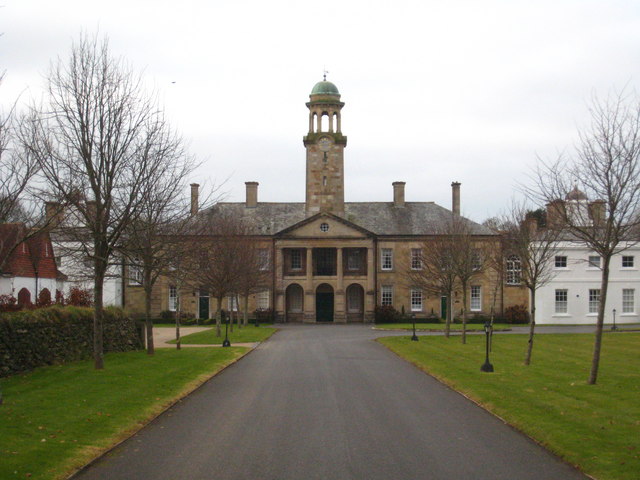
Tehidy House
A large mansion was built 1734-39, by Thomas Edwards of Greenwich, for John Pendarves Basset and in 1861 John Francis Basset commenced a rebuild, completed in 1863, using his vast wealth arising from his tin mining ownership. In the C20th the house became the basis of Tehidy Hospital. When this closed in the 1980s the house was converted to residential apartments. The surrounding Tehidy Estate is now owned by Cornwall Council and is open to the public as Tehidy Country Park.


Important figures of the day dined and danced the nights away here and the great house became a symbol of wealth and power in the county. Influential mining engineers like Trevithick, Woolf and Hornblower – whose revolutionary technological developments went on to have international impact – first discussed their ideas at Tehidy.

Peerage gained thanks to Cornish miners

In 1779 the combined fleets of France and Spain unexpectedly anchored off Plymouth where the city’s defences were woefully inadequate. The following year the then owner of Tehidy, Francis Basset, became a national figure and received his peerage as Baron de Dunstanville for marching his fit Cornish miners all the way to Plymouth where they made the marine fortifications safe.

Between 1798 and 1842, 400 acres of Tehidy land were cultivated to cater for an influx of miners who came to work the thriving 19th century copper mines. Cornwall’s first horse-drawn tramroad, transporting copper ore from Poldice to Portreath from 1809, was largely financed by Sir Francis Basset. When he died in 1835, 20,000 people gathered at Tehidy to process with his coffin and 150 carriages. The de Dunstanville monument was erected on Carn Brea in his honour.

Tehidy becomes one of the finest buildings in Cornwall

In 1855 Sir Francis’ nephew John Francis Basset took over Tehidy and he also prospered from the mines. He rebuilt the mansion to create one of the finest buildings then in Cornwall with 40 bedrooms and a lavish drawing room with a gold ceiling.

The end of Basset Rule

In 1916 the great manor was sold, ending 700 years of Basset rule. The house and estate was divided and in 1919 it opened as a hospital for the treatment of TB sufferers. A great fire devastated the building only two weeks after the hospital opened - one of a number rumoured to be the work of Tehidy ghosts.

In 1983 the grounds were purchased by Cornwall Council and developed as a Country Park. Part was leased to Tehidy Golf Club and part sold for the 1995 rebuilding and development of new houses around the central core of the original building.

BASSET of Cornwall, Family of. The Bassets were amongst the early Norman settlers in England (one Thurstan Basset appears in the roll of Battle Abbey), and they have been, from at least the days of the Plantagenets, associated with Tehidy, the seat of their present representative. According to Hals, a Basset held some military post in Cornwall as early as the time of Robert, Earl of Mortain: but Lysons (who had a good opportunity of forming a sound judgment, from his personal acquaintance in the early part of the present century with Sir Francis Basset, first Baron de Dunstanville) says that the Bassets (who seem to have been first settled in Oxfordshire and other of the midland counties) can scarcely be said to have become Cornish folk (although they may have held property in Cornwall earlier) until the marriage of Adeliza de Dunstanville with Thomas, Baron Basset of Hedendon, Oxfordshire, in the time of Henry II; her ancestor, Alan de Dunstanville, was lord of the manor of Tehidy as early as 1100. Mr. G. P. Scrope, M.P., in his 'History of the Manor of Castle Combe, Wilts,' corroborates this account. This Thomas Basset appears to have been a descendant (probably a greatgrandson) of Henry I's justiciary (Osmund Basset), and himself held a like post under Henry III. Other members of the families of Basset and De Dunstanville also intermarried in the reign of Richard I; and in fact it is extremely difficult to trace the details of the first settlement of the Bassets in Cornwall.

But, once settled in the county, they have steadfastly remained there, at Tehidy, near Camborne, up to the present time; and the bones of many generations of Bassets lie in Illogan church. They intermarried with Trenouth, Trengove, Trelawny, Marrys, Enys, Carveth, Godolphin, Prideaux, Grenville, Pendarves, Rashleigh, and others, many of which families are now extinct, and their blood is thus intermingled with that of most of the prominent Cornish fnmilies. Amongst the early Cornish Bassets may be cited Sir Ralph, who was summoned from Cornwall to attend, with other knights, Edward I in the Welsh wars at Worcester in 1277, and it was probably he or one of his sons who obtained from Edward III a patent for certain markets and fairs for the neighbouring town of Redruth, He also procured a license to embattle his manor house of Tehidy in the year 1330–1 (Rot. Pat. 4 Ed. III, mem. 10), and Leland mentions it as 'a castelet or pile of Bassets.' The name of a William Basset appears in the time of Edward II (1324) amongst the 'nomina hominorum ad arma in com. Cornubiæ' (Carew), and another Basset of the same name held a military fee at Tehidy and Trevalga in 3rd Henry IV. During the reigns of the 6th, 7th, and 8th Henries the Bassets were frequently sheriffs of Cornwall; and during the reign of Edward IV, according to William of Worcester, a Sir John Basset held the castle, the ruins of which still stand, on the summit of Carn Brea, not far from Tehidy. Their 'right goodly lordship,' as Leland calls it, extended over the parishes of Illogan, Redruth, and Camborne, the advowsons of which pertained to the manor of Tehidy, and the livings were occasaionally held by some member of the family; but their wealth has in later times been mainly derived from the enormous mineral riches of this part of Cornwall, albeit they likewise had considerable property in the north-eastern part of the county. The names of the earlier Bassets are little known in history, save that in the time of Henry VII a John Basset, then sheriff of Cornwall, found his posse commitatus too weak to suppress 'the Flammock rebellion.' About the middle of the sixteenth century the Bassets seem to have divided into two branches, one becoming a Cornish and the other a Devon family, the latter of which became extinct at the dose of the last century; but the Cornish branch was continued by George Basset, M.P., whose son married a Godolphin, and whose mother was a Grenville of Stow. Amongst their descendants were the two most distinguished members of the Basset family, viz. Sir Francis, vice-admiral and sheriff of Cornwall [q. v.] in the time of Charles I and another Sir Francis first Baron de Dunstanville [q. v.] in the time of George III. The little port of Portreath was formerly named after this family Basset's cove The Bassets were staunch royalists during the civil wars and held St Michael's Mount till 1660 when it was acquired from them by the St. Aubyns. A most amusing account of Francis Basset (under the pseudonym of Bassanio), grandfather of the first Baron de Dunstanville, and a sketch of Tehidy life 150 years ago, will be found in Mrs. Delany's 'Autobiography.' vol i. passim, and vol. iii p 431

The present representative of the family is Gustavus Lambart Basset, Esq., of Tehidy (late lieutenant of the 72nd Highlanders).

Tehidy and the Bassets tells the story of the Basset family from Norman times, their development of Tehidy Park and the building of the mansion. Michael Tangye describes the end of the family's reign and the making of the TB hospital and the more recent development of the estate and mansion.
Meticulously researched the book reveals details of the daily life through the centuries of the Bassets, their servants and tenants. Written with knowledge, enthusiasm and insight, the book is very readable and gives a fascinating picture of, not just the Basset estate, but life in Cornwall as it must have been.

Nearly ninety years have passed since the last of the family vacated the mansion, but their legend lives on - the Bassett name is ever-present in streets, roads, schools and pubs. Many older inhabitants of Redruth will have been brought up with stories of the pre-eminence of the Bassets, when the family ruled like kings over their subjects. The great house at Tehidy was the centre of their kingdom, a symbol of power, wealth and at times, benevolence. It grew in pace with an ever-increasing fortune derived from numerous rich tin and copper mines and a succession of marriages into other wealthy Cornish families.

The story of this remarkable family and the ultimate collapse of their empire makes fascinating reading. The history of the Bassets is a history of Cornwall and its people.

Michael Tangye is a well known and respected local historian. He is a Bard of the Cornish Gorsedd - Bardic name Whythrer Meyn (Examiner of Stones), an Ex-President of the Federation of Old Cornwall Societies and Recorder of Archeology for same.

THE GREAT FAMILIES OF CORNWALL: The Arundells

Arundell of Lanherne. —

The origin of this family is very incorrectly stated in the peerages, and with great confusion of erroneous dates; nor have we been able to explain it very satisfactorily by any pedigrees to which we have had access.

Some accounts make the founder of the Lanherne family marry the heiress of Lanherne, who had married the heiress of Pincerna; others make Arundell and Umphraville marry coheiresses of Pincerna.

None of the heraldic writers, who have treated of this family, seem to have been aware that they came from YewtonArundell in Devonshire, which continued to be the property of the Arundells of Lanherne, till about the year 1600. Sir William Pole tells us, that Ralph Arundell was of Yewton as early as the reign of King Stephen.

The earliest intimation we have of the Arundells in Cornwall from public records is in 1346, at which time it appears that John Arundell held the manors of Treloy and Trembleth.

One of the Arundells (probably Sir Ralph, who was sheriff of the county in 1260) had long before this married the heiress of Trembleigh or Trembleth in St. Ervan, and this we believe was the origin of their settling in Cornwall.

Nearly contemporary was Sir Renfrey Arundell, of whom we have intimation in a pedigree of the Roscarrocks, which Sir Renfrey is said to have married the heiress of Treffry (supposed of Treffry in Linkinhorne), and to have had a son, Lawrence Arundell of Blayboll (probably Blable in St. Issey), whose daughter and heir married Roscarrock.

It appears that in 1346 John de Umphraville held Lanherne in right of Alice his wife, which Alice, no doubt, was the heiress either of Lanherne or Pincerna, for it appears to have been the same family (fn. n1).

If the pedigree as given by Sir William Pole be correct (as in most particulars it appears to be, though we suspect that a link or two have been lost), it seems probable that John de Umphraville married the widow of Sir Renfrey, and thus held Lanherne jure uxoris (fn. n2).

The name of John does not occur in Sir William Pole's pedigree, but it is certain that in 1346 he possessed Trembleth, the original Cornish seat of the family, and that either he or his heirs soon afterwards became possessed of Lanherne, and removed thither their residence. From the Lanherne stock branched out the Arundells, who were of Tremoderet in Duloe in the fifteenth century; those of Tolverne in Filleigh; those of Trevithick in St. Columb; and those of Wardour-Castle in Wiltshire.

The ancestor of the last mentioned family, Sir Thomas Arundell, a younger son of Sir John Arundell of Lanherne, married Margaret, daughter and coheir of Lord Edward, and sister of Queen Catherine Howard. The Lanherne Arundells became extinct, in the year 1701, by the death of Sir John Arundell, who settled his estates on Richard Bealing, Esq., his daughter's son, on condition of his taking the name of Arundell. The sole heiress of this Richard was married, in 1739, to Henry Lord Arundell (fn. n3), of Wardour, in consequence of which match the present Lord Arundell is representative of the elder as well as of one of the younger branches of Arundell of Lanherne. This family married heiresses of Trembleth, Pincerna or Lanherne, Le Sore, Luscot (fn. n4), Lambourn, and Tresithney, and coheiresses of Carminow, Chidiock, and Dinham.

Arms of Arundell, anciently of Yewton-Arundell in Devonshire, and afterwards of Lanherne: — Sab. six swallows Argent, three, two, one. — Sir John Arundell of Lanherne, in the reign of Edward III., bore a lion passant between the swallows, as appears by his seal appendant to a deed of that date.

The Arundells of Tolverne in Filleigh, settled there in consequence of the match with Le Sore or Soor in the reign of Richard II., and continued for many descents, having married the coheiresses of Archdekne, Courtenay, Earl of Devon, Penpons, and St. Aubyn. In or about the reign of Charles I., they removed to Trevarnoe and Truthall in Sithney, and were also of Methleigh in Breage, which was sold by John Arundell, Esq. in the early part of the last century. This John, who died in 1718, left a sole heiress married to William Jago, Esq., ancestor of Thomas Jago, Esq., of Launceston (fn. n5). His younger brother continued the male line, and resided at Marazion. The last of this family, by whose death the name of the Lanherne Arundells expired in Cornwall, was Mr. John Arundell, who died in 1766, being the collector of the customs at the port of Falmouth: his sisters married St. Aubyn of Plymouth, Powell, and Robinson. The Arundells, who were of Tremoderet in Duloe in the fifteenth century, were descended from Sir Renfrey, a younger son of Sir John Arundell of Lanherne (by the heiress of Lambourn), which Sir Renfrey married the heiress of Coleshill of Tremoderet. This family (of which was John Arundell, Bishop of Exeter) became extinct after three descents, by the death of Sir Edmund Arundell. Some pedigrees represent Elizabeth, the aunt and only heir, as married to Whittington, and afterwards to Stradling: others, more correctly, represent two coheiresses married to Whittington and Stradling. Sir John St. Aubyn is descended from the Whittingtons.

The Arundells of Trevithick in St. Columb, a younger branch of the Lanherne family, settled there in or about the reign of Edward VI., and became extinct about the year 1740. The heiress married Rawe of Endellion: Richard Rawe, Esq. is the representative of this branch of the Arundell family.

A younger branch of the Arundells of Trevithick, was of Carvynick in St. Enoder. The sole heiress of this branch married a younger son of the Tanners of Comb in Brannell, from two of whose coheiresses are descended the Rev. Thomas Penwarne of St. Germans, and Richard Taunton, M.D., of Truro.

A younger branch of the Arundells descended from Thomas, a younger son of Sir John Arundell, and Anne Moyle, settled at Clifton in Landulph, about the year 1500, and became extinct about 1620. The coheiresses married Killigrew and Lower.

John Arundell of Trerice, who lived in the reign of Queen Elizabeth, had, by his first wife, the heiress of Coswarth, four daughters, married to Carew of Anthony, Somaster, Coswarth, and Dinham.

Thomas, a younger brother of John Arundell, the brave defender of Pendennis Castle, settled at Tremoderet in Duloe (which, at a former period, had been the seat of a younger branch of the Lanherne Arundells), in the reign of Charles I. This branch of the Arundells became extinct in the early part of the last century.

Tonkin says, that a younger branch of the Arundells of Trerice was settled for some time at Trerice in St. Allen.

The son of Sir John Arundell of Trerice, by the coheiress of Beville, settled at Gwarnick: this branch soon became extinct, by the death of John Arundell, Esq., commonly called Black Arundell, in 1597.

The Arundells of Menadarva in Camborne were descended from a younger son of Sir John Arundell of Trerice, who died in the early part of the seventeenth century. It has been supposed that this was an illegitimate branch, but it is most probable, that the tradition on this subject have arisen from the expression of natural son, applied to the first owner of this estate, in his father's will; but as it is well known, and now generally admitted, that the expression of natural son was at that time never used in the acceptation it now bears, it is, in fact, a proof of the contrary. The immediate descendant of this branch, and the only Arundell remaining in Cornwall, in the male line, is William Harris, Esq., of Pembroke-College in Oxford, whose grandfather, William Arundell, Esq., took the name of Harris on succeeding to the Kenegie estate, as before-mentioned. John, a younger son of William Arundell (grandfather of the present William Harris), retained the name of Arundell, and left male issue, who reside in Devonshire. It is probable that the Arundells of Trevelver in St. Minver, extinct in the latter part of the last century, were descended from a younger branch of the Menadarva family.